What 4.5 and 5.5 TOEFL Scores Mean — Including UK Universities
Quick answer
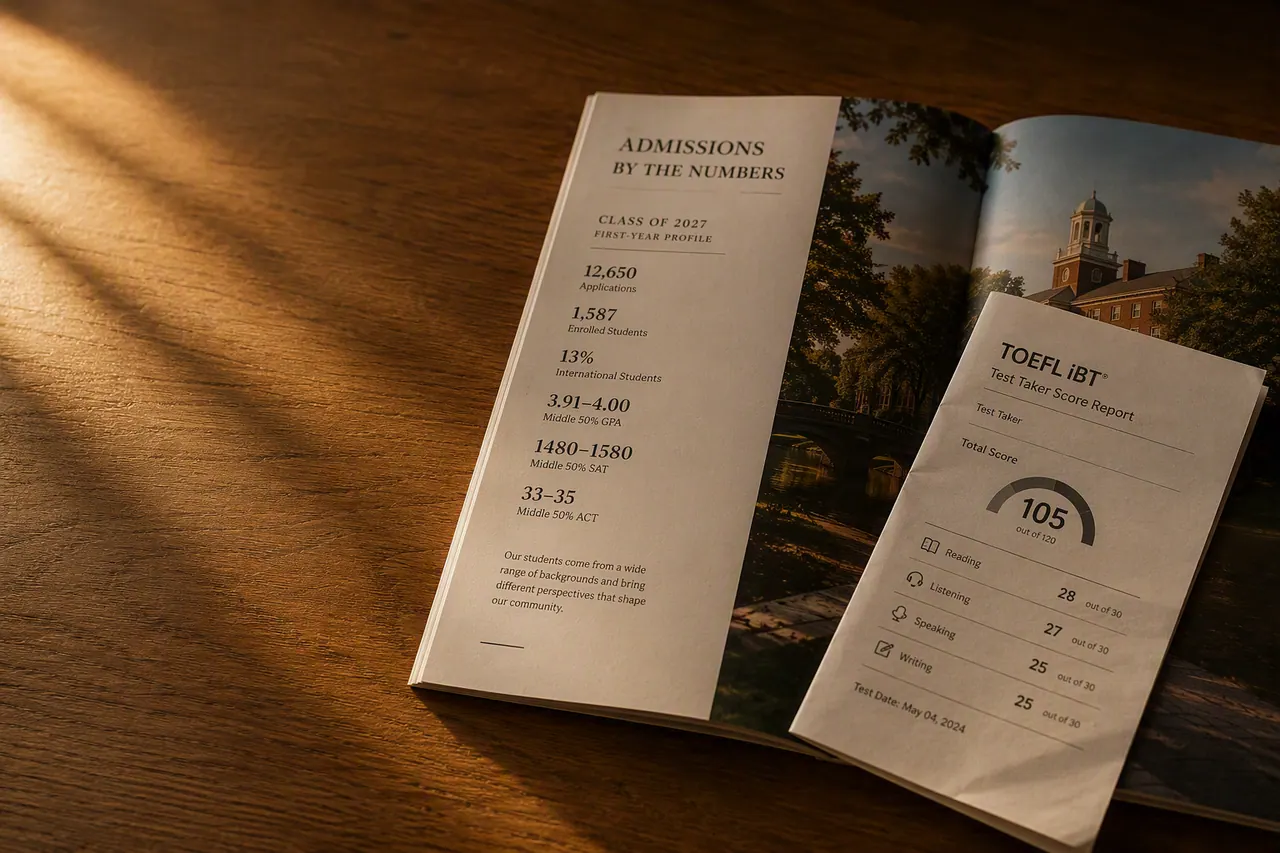
A 4.5 TOEFL iBT overall is typically B2; 5.5 is typically C1 on the 1–6 scale ETS introduced on 21 January 2026. Those bands map to about 86 and 107 on the old 0–120 scale. Some UK universities accept TOEFL for admission, but TOEFL is not on the Home Office SELT list for Student visas — IELTS for UKVI is. US undergraduate minima often sit at 4.0–4.5; more selective courses want 5.0–5.5. Always check the department page. Nexus Academy offers a free diagnostic.
If you searched “4.5 TOEFL score” or “5.5 TOEFL score”, those are real 2026 bands, not typos. ETS moved iBT reporting to a 1–6 scale while thousands of university pages still say “TOEFL 80”. For a UK offer, confirm whether the sponsor wants IELTS Academic or will accept TOEFL on the CAS — then prepare that test. TOEFL tutoring closes the gap faster than another conversion table.
What changed on 21 January 2026
ETS rebuilt both the test and the score report. The points that change university applications are:
New 1–6 band: Each of Reading, Listening, Speaking and Writing is scored from 1 to 6 in 0.5 steps. The overall score is the average of the four sections, rounded to the nearest half band. A 5.25 average becomes 5.5.
CEFR alignment: The bands are designed to sit next to CEFR levels. 4.0–4.5 is typically B2; 5.0–5.5 is C1. That is why a “4.5 TOEFL score” now appears in search — it is a real reported band, not a percentage.
Shorter sitting: ETS asks you to allow about two hours including instructions. Reading and Listening are multistage adaptive. Speaking uses Listen and Repeat plus a simulated interview. Writing includes Build a Sentence, Write an Email, and Write for an Academic Discussion.
Two scores until January 2028: Official reports show the 1–6 overall and section scores plus a comparable 0–120 total. After that window, only the 1–6 band is intended to remain. If a university still lists 90 or 100, send the report as usual and let admissions read the comparable total.
What TOEFL score US universities actually ask for
Ivy League and highly selective (Harvard, MIT, Stanford, Princeton, Yale, Columbia and similar)
Most still publish 100 on the old scale. ETS’s own mapping for a 100 requirement is band 5.0; competitive applicants to these programmes often sit at 5.5 (107+). Meeting the English minimum does not admit you. It only keeps the file in the pile.
Flagship state and Top 50 research universities
A published 90 is band 4.5 (86+). A published 100 is band 5.0 (95+). UC campuses, Michigan, Georgia Tech and similar often sit in that 4.5–5.0 window for undergraduate entry, with graduate and professional schools higher.
Typical state universities
Many ask for 80, which ETS maps to 4.0 (72+), or 90 / 4.5. Conditional admission and pathway English programmes are common just below the line. If you are 0.5 band short, do not assume a rejection — email the programme, then close the gap with a timed resit plan.
Community colleges and open-admission routes
Some accept 3.0–3.5 (44+ to 58+) or waive TOEFL for certain programmes. Check the college, not a ranking-site average.
Country-level ranges (US, UK, Canada, Australia) are also summarised on our TOEFL tutoring page. Treat every number as a starting point and confirm it on the programme admissions page.
Official 1–6 scale vs 0–120 (ETS concordance)
New TOEFL band (2026)
Comparable 0–120 total
Typical US requirement
5.5
107+
Highly selective / many Ivy League programmes
5.0
95+
Competitive universities (published 100)
4.5
86+
Flagship state universities (published 90)
4.0
72+
Many state universities (published 80)
3.5
58+
Pathway programmes and some community colleges
3.0
44+
Open-admission routes where TOEFL is required
Floors are from ETS’s 1–6 to 0–120 concordance (for example 4.0 = 72+, 4.5 = 86+, 5.0 = 95+, 5.5 = 107+). A 0–120 total is a sum of section scores, so two students with the same overall band can have different comparable totals. Universities may still pick a number that is not an exact band boundary.
When the website still says TOEFL 90 or 100
Use the comparable 0–120 total on your score report first. ETS recommends mapping a published 80 to band 4.0, 90 to 4.5, and 100 to 5.0. Do not invent a midpoint conversion of your own.
If you are within 0.5 band of the published line, email the admissions office with your report before you pay another test fee. Some departments are stricter than the university page; some are not.
Why the university minimum is not the programme minimum
Medicine, law, MBA and some engineering faculties often sit a band above the general undergraduate line. Section minima matter too: a 5.0 overall with Speaking at 3.5 can still fail a programme that asks for 4.5 in each skill.
That is the gap a diagnostic finds in one sitting. Nexus Academy’s TOEFL programmes start with a free section-by-section diagnostic, then a Rapid, Standard or Full plan from £25/hr — details are on pricing.
Applying to the UK instead — or choosing between IELTS and TOEFL
IELTS and TOEFL are not the same test. UK universities almost always publish IELTS Academic bands. US universities historically preferred TOEFL; most now accept both. If your firm choice is the UK, start with IELTS scores for UK universities and IELTS tutoring. If you are still choosing a test, read IELTS vs TOEFL 2026 or the IELTS & TOEFL hub.
How to close the gap to your target band
Pre-2026 prep books still train reading and listening skill, but they do not match the adaptive modules or the new speaking and writing tasks. Use current ETS materials, then practise the tasks you will actually sit.
A realistic 30-day block can move an upper-intermediate student by about half a band if the diagnostic is honest. How to prepare for TOEFL in 30 days sets the weekly plan. Speaking and writing usually need a tutor: templates collapse on Listen and Repeat and on the email task.
A 4.5 TOEFL iBT overall is a B2-level band on the 1–6 scale ETS introduced in January 2026; Nexus Academy treats it as roughly 86 on the old 0–120 scale. It is a real reported score, not a percentage. Many UK and US undergraduate minima sit at 4.0–4.5. Always match the department page, not a forum conversion.
What does a 5.5 TOEFL score mean?
A 5.5 TOEFL iBT overall is a C1-level band; Nexus Academy maps it to about 107 on the old 0–120 scale. Highly selective programmes often ask for 5.0–5.5. Through January 2028 the official report still prints both scales.
Do UK universities accept TOEFL?
Some UK universities accept TOEFL iBT for admission, but Nexus Academy does not treat TOEFL as a UK Student visa SELT. The Home Office approved list is IELTS for UKVI, PTE Academic UKVI, LanguageCert SELT and similar tests — not TOEFL. Degree-level sponsors may still confirm English on your CAS using TOEFL. Check the offer letter and GOV.UK before you book.
What TOEFL score do US universities need?
Most US universities still quote 4.0–4.5 overall (about 72–86); more selective courses want 5.0–5.5 (95–107+). Nexus Academy prepares the band on your department page. If you are choosing between tests for a UK offer instead, start with IELTS Academic.