A Level Chemistry
A Level Chemistry Tutoring Online — Mechanisms, Calculations and Paper 3 Practical Skills
A Level Chemistry is widely considered one of the most demanding A Levels available. It combines the abstract conceptual depth of physical chemistry, the vast factual content of inorganic chemistry, and the mechanistic complexity of organic chemistry — across two years, three papers, and a practical endorsement. Students who do well in it do not just work hard. They prepare specifically and systematically.
From £18/hr · AQA, Edexcel & OCR · Free first session
Why Nexus Academy
One-to-one A Level Chemistry tutoring
A Level Chemistry is widely considered one of the most demanding A Levels available. It combines the abstract conceptual depth of physical chemistry, the vast factual content of inorganic chemistry, and the mechanistic complexity of organic chemistry — across two years, three papers, and a practical endorsement. Students who do well in it do not just work hard. They prepare specifically and systematically.
Nexus Academy's A Level Chemistry tutors are degree-educated chemists with real teaching experience and deep knowledge of the A Level specifications. Whether a student is struggling with organic mechanisms, lost on spectroscopy, or finding the physical chemistry calculations impenetrable, we identify the specific difficulty and address it directly.
Also available: GCSE Chemistry tutoring →
The Challenge
Why A Level Chemistry challenges even motivated students
A Level Chemistry demands three different types of thinking simultaneously. Physical chemistry requires mathematical ability — calculations involving enthalpy, equilibrium constants, electrode potentials, and rate equations. Inorganic chemistry requires systematic memorisation of trends, reactions, and properties across the periodic table. Organic chemistry requires the ability to draw and interpret mechanisms — a visual-spatial skill that many students find genuinely difficult at first.
The examination style adds another layer of challenge. A Level Chemistry examiners reward precision — the exact functional group, the exact conditions, the exact observation. A vague answer that demonstrates general understanding will not score highly. Students need to know what examiners want to see, which means working with mark schemes from early in their preparation.
Our Approach
How Nexus A Level Chemistry tutors work
A Level Chemistry sessions are built around the student's exam board specification from the outset. Our tutors know which mechanisms, reactions, and concepts carry the most marks in each paper — and structure sessions accordingly.
Organic mechanisms are drawn and practised repeatedly on the shared digital whiteboard until students can reproduce them reliably under exam conditions. Physical chemistry calculations are worked through with a focus on reliable method — rearranging equations, handling significant figures, and presenting answers in the format the mark scheme requires.
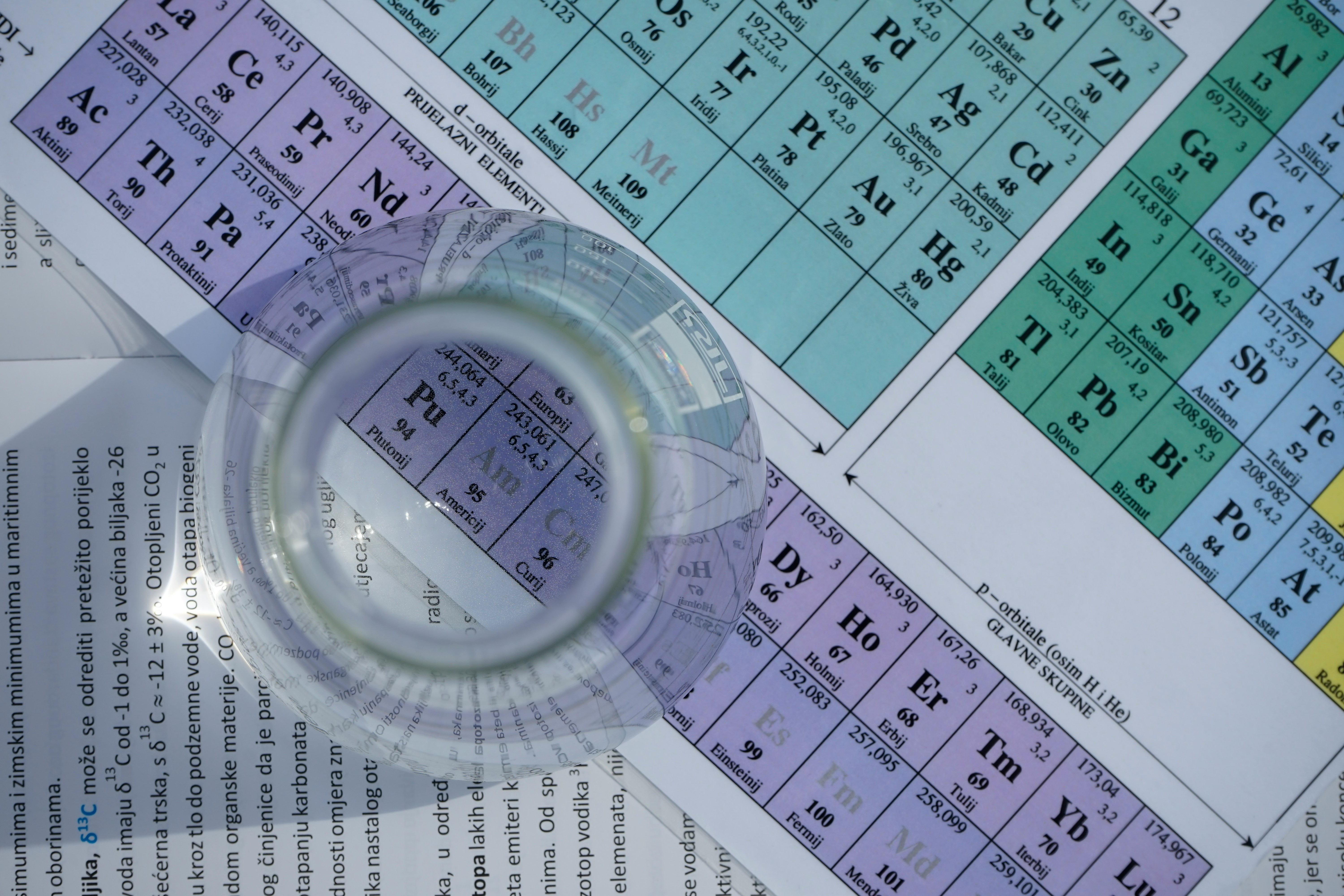
Inorganic chemistry is systematically organised using the periodic table trends as the framework, making what can feel like an overwhelming list of facts into a logical pattern.
94%
of Nexus Academy students hit their target grade
Syllabus Coverage
A Level Chemistry topics we cover
Every topic is taught in alignment with the student's specific exam board and year group — no generic A Level content.
Physical Chemistry
- Atomic structure and bonding
- Energetics and kinetics
- Chemical equilibria and redox
- Electrode potentials, acids and bases
- Thermodynamics (Year 2)
Inorganic Chemistry
- Periodicity and Group 2
- Group 7 and transition metals
- Reactions of ions in aqueous solution
Organic Chemistry
- Alkanes, alkenes and halogenoalkanes
- Alcohols, aldehydes and ketones
- Aromatic chemistry and amines
- Optical isomerism and NMR spectroscopy
- Amino acids and polymers
Practical Skills
- Required practicals
- Planning and evaluation
- Data analysis and error calculation
Exam Board Specialists
Exam boards we cover
A Level specifications differ significantly between exam boards. Your child is matched with a tutor who knows their specific board's requirements.
AQA A Level Chemistry
Our tutors know AQA's three-paper structure, the specific organic mechanisms AQA expects students to be able to draw from memory, and the mark scheme conventions for physical chemistry calculations.
Edexcel A Level Chemistry
Including Edexcel's specific approach to the practical papers and the way Edexcel frames spectroscopy and analytical chemistry questions.
OCR A Level Chemistry (A and B)
Both OCR specifications have distinct structures. OCR Chemistry B (Salters) has a context-based approach that requires particular preparation — our tutors work with the specific version your student's school follows.
AQA, Edexcel and OCR A Level Chemistry — the differences that affect preparation
A Level Chemistry is assessed across three papers on all major boards. Nexus Academy diagnostics map mark loss to the specific paper — Paper 1 (physical and inorganic), Paper 2 (physical and organic), or Paper 3 (synoptic and practical skills) — then weight sessions accordingly. Organic mechanisms are taught from electron-flow logic on the shared whiteboard until students can reproduce SN1, SN2, and nucleophilic addition accurately under exam conditions.
Where A Level Chemistry students lose the most marks — by paper
Paper 1 (Physical and Inorganic Chemistry): equilibrium constants, electrode potentials, enthalpy cycles, and periodic trends — calculation precision and unit handling decide grades here.
Paper 2 (Physical and Organic Chemistry): mechanism drawing, NMR and spectroscopy interpretation, and multi-step synthesis pathways — curly-arrow accuracy and stereochemistry (e.g. SN2 inversion) are the most commonly lost marks.
Paper 3 (Synoptic and practical skills): experimental design, error calculation, data analysis, and questions on the 12 required practicals (AQA 7405). Students who treat practicals as laboratory exercises rather than examinable content consistently underperform here.
A priority across all three papers in 2026 examiner reports: students who write that "covalent bonds break on boiling" when explaining state changes lose marks repeatedly. Nexus tutors address the intermolecular versus intramolecular distinction explicitly in the first month of every programme.
AQA A Level Chemistry (7405) — the most widely sat, with 12 required practicals
AQA A Level Chemistry is assessed through three papers. Paper 1 (Physical and Inorganic Chemistry, 2 hours, 105 marks) and Paper 2 (Physical and Organic Chemistry, 2 hours, 105 marks) are the main theory papers. Paper 3 (2 hours, 90 marks) is synoptic and includes questions on all areas of the specification, data analysis, and a section specifically testing the 12 required practicals.
AQA specifies 12 required practicals that must be taught during the course. Questions about these practicals — including experimental design, apparatus selection, data analysis, and evaluation of method — appear specifically in Paper 3. Students who treat the practicals as laboratory exercises rather than examinable content consistently underperform on Paper 3.
Edexcel A Level Chemistry (9CH0) — international influence and practical papers
Edexcel A Level Chemistry is assessed through three papers including a separate practical paper (Paper 3) that focuses on experimental skills and data analysis. Edexcel's question style reflects its international IGCSE heritage — questions frequently present novel chemical contexts and ask students to apply principles rather than recall specific reactions.
A distinctive and well-documented error in Edexcel A Level Chemistry involves mass spectrometry questions: when calculating the mass-to-charge ratio of an ion formed by electrospray ionisation, the ion's mass is one unit greater than the molecule's relative molecular mass (due to the added proton). Students who use the molecular mass directly in the calculation arrive at an incorrect answer. Edexcel examiner reports specifically identify this as a "critical trap" that appears in multiple series and costs students marks.
OCR A Level Chemistry (H432 and H433 Salters)
OCR offers two A Level Chemistry specifications. OCR Chemistry A (H432) is a conventional specification. OCR Chemistry B (H433) — Salters Advanced Chemistry — is context-based: topics are introduced through real-world chemical scenarios (such as the chemistry of the oceans or pharmaceutical compounds). Salters requires students to engage with chemical ideas through their context, which is distinctive from the topic-by-topic approach of AQA and Edexcel. Students and parents should confirm which OCR route their school follows, as the approaches to revision and the paper styles differ significantly.
What A Level Chemistry examiners consistently find students getting wrong — May 2026
Organic mechanisms drawn incorrectly. Organic mechanism questions carry significant mark weight across all three papers and are among the most commonly lost marks in A Level Chemistry. Examiners identify two persistent errors: drawing curly arrows from the wrong atom (arrows must originate from a bond or lone pair, not from a partial charge or atom), and failing to show the correct stereochemistry for reactions such as SN2 (which requires inversion of configuration). Nexus tutors practise mechanism drawing from first principles — understanding the electron flow logic — until mechanisms can be reproduced accurately from memory under exam conditions.
The intermolecular forces misconception — covalent bonds do not break on boiling. Examiner reports across all boards flag this as a persistent error. When a simple molecular substance (water, iodine, HCl) changes state from liquid to gas, it is the intermolecular forces that break — not the covalent bonds. Students who write that "the covalent bonds break" when explaining boiling points lose marks on a question type that appears in almost every A Level Chemistry series. Nexus tutors address this misconception explicitly and early.
Hydrogen bonding diagrams drawn incorrectly. When asked to draw hydrogen bonds between two molecules, students must show: the lone pair on the electronegative atom (N, O, or F), the bond drawn from the hydrogen to the lone pair (not from atom to atom), the partial charges (δ+ and δ−), and correct geometry. Omitting the lone pair, drawing the bond to the atom rather than the lone pair, or forgetting partial charges are all cited specifically in examiner reports.
Electrode potential and cell EMF calculations. Questions on electrode potentials and cell EMF require students to subtract the less positive standard electrode potential from the more positive one to find the cell EMF. The sign convention confuses students who confuse oxidation and reduction half-equations, or who apply the formula in the wrong direction. This topic appears in almost every A Level Chemistry Paper 1 and is one of the most reliably lost marks at grades C–B.
Spectroscopy — the mass spectrometry ion mass error. Electrospray ionisation adds a proton to the molecule, making the detected ion one mass unit heavier than the molecular mass. Students using the molecular mass directly in the kinetic energy calculation for time-of-flight mass spectrometry arrive at the wrong answer. Nexus tutors address this specific error explicitly because it appears repeatedly in Edexcel and AQA examiner reports.

Inside a Session
What a typical A Level Chemistry lesson looks like
Organic mechanisms are a centrepiece of A Level Chemistry sessions. Your tutor draws mechanisms step by step on the shared whiteboard, explaining the electron movement logic, and the student practises reproducing them until the process becomes fluent.
Physical chemistry calculations are worked through with full method — rearranging equations, unit conversion, significant figures — until the approach is reliable rather than memorised. Mark schemes are used throughout so students understand precisely what examiners reward.
“A Level Chemistry nearly broke my daughter's confidence entirely. She had been predicted an A at GCSE and was getting D grades in Year 12 mocks. Her Nexus tutor was the first person who explained organic mechanisms in a way that made sense to her. By her Year 13 exams she achieved a B — enough to secure her place to study Pharmacy.”
Common Questions
Frequently asked questions — A Level Chemistry tutoring
Organic mechanisms are the area of A Level Chemistry that most consistently causes difficulty, and they are also the area most responsive to one-to-one tutoring. The reason students struggle is usually that mechanisms were taught quickly in class and the visual-spatial logic behind them was not fully explained. Nexus Academy tutors spend as many sessions as needed on mechanisms — drawing them step by step, explaining the electron movement logic, and practising until the student can reproduce them reliably in exam conditions.
The number of sessions depends on the starting point and the time available. Students who begin tutoring in Year 12 and continue into Year 13 typically have two sessions per month, increasing to weekly sessions in the term before exams. Students who come to us in Year 13 for intensive preparation often benefit from weekly or twice-weekly sessions. During the free diagnostic, your tutor will give you a realistic recommendation.
Yes. Nexus Academy tutors cover practical skills as part of the A Level Chemistry programme — including the required practicals, data analysis, error calculation, and the planning and evaluation questions that appear in written papers. Exam questions about practical skills appear in all three written papers and are a consistent source of marks.
AQA A Level Chemistry specifies 12 required practicals. Questions about these practicals appear specifically in Paper 3, which includes data analysis, experimental design evaluation, and practical skills questions. Students are not asked to recall what happened in their own laboratory work — they are asked to apply practical knowledge to questions about experimental design, apparatus, variables, and data interpretation. Nexus Academy covers all 12 AQA required practicals as a standard part of every A Level Chemistry programme, with specific focus on the question types that Paper 3 uses.
The two most consistent errors in organic mechanism questions are drawing curly arrows from incorrect starting points (arrows must originate from a bond or lone pair, not from a partial charge or atom symbol) and failing to show correct stereochemistry for reactions such as SN2 nucleophilic substitution, which requires inversion of configuration at the chiral centre. Nexus Academy tutors teach organic mechanisms from the underlying electron-flow logic rather than as patterns to memorise, which produces more reliable and more accurate mechanism drawing under exam conditions.
Yes. It is very common for A Level Chemistry students to have uneven performance across the three areas of the specification. Physical chemistry calculations — particularly equilibrium constants, electrode potentials, acid-base equilibria, and thermodynamic calculations — require a systematic approach and precision with units and significant figures that many students do not develop automatically. Nexus Academy identifies the specific calculation types causing mark loss during the diagnostic and addresses them methodically, using mark scheme analysis to teach the exact presentation of working that AQA, Edexcel, and OCR examiners require.
Still have questions? We're happy to help.
Also studying GCSE Chemistry? See GCSE Chemistry tutoring →
Comparing exam boards? AQA vs Edexcel vs OCR explained →
Start Today
Book a free A Level Chemistry demo lesson
Your tutor will assess the specific difficulties and build a structured plan. No payment required.
Book a Free Demo LessonFrom £18/hr · No commitment · Free first session